The Cost of Inaction: Flat Roof Maintenance in a Net-Zero World
Industry best practice, Building standards and regulations, Design considerations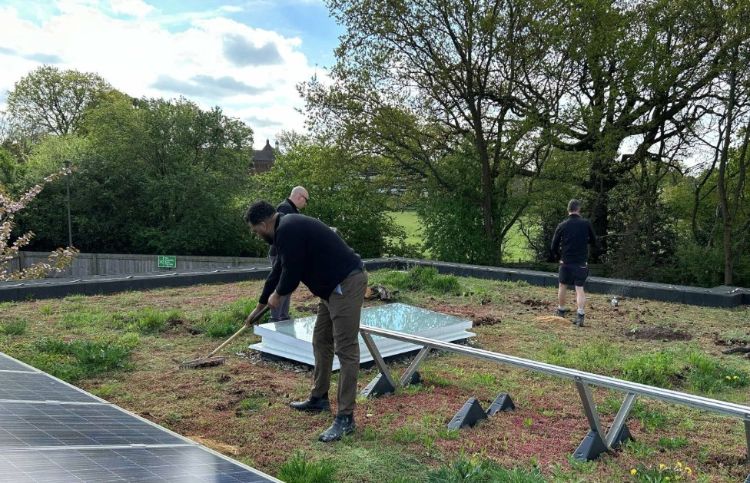

With the increased utility flat roofs provide comes the responsibility of maintenance to maximise their performance and sustainability benefits.
I have been working in the flat roofing industry now for longer than I care to admit. When I first started, it was universally accepted that flat roofs should be kept clear. After all, poor design and installation made them prone to leaking, so unrestricted access was important to ensure maintenance was as straightforward as possible.
Thankfully, since then the industry has come a long way in raising both material and installation standards to the levels of quality and durability that companies such as Bauder now provide.
As a result of this increased security and durability, modern flat roof systems have evolved to become a location used for siting environmental enhancements such as solar photovoltaic (PV) arrays, green roofs and blue roofs, and even designed as useable amenity spaces.
This shift, however, brings with it a new and growing responsibility: the need for more frequent, structured and proactive roof maintenance for both safety compliance and maximising environmental benefits.
The increased sustainability benefits and utility of flat roofs
Flat roofs are now valuable real estate for buildings. Solar PV systems are becoming more ubiquitous, with the upcoming requirements of the UK Government’s Future Homes Standard (FHS) set to ensure all new build homes will have a minimum of 40% solar PV roof coverage.
Many clients are equally trying to incorporate roof gardens alongside environmental enhancements in the form of green roofs and blue roofs along with ever increasing amounts of M&E equipment.
In short, flat roofs can and do provide significant opportunities to increase the environmental performance and value of a building. With the value of this ‘real estate’ now fully recognised and capitalised upon by specifiers and developers, formerly simple flat roofs have evolved into increasingly dense and complex systems.
Biosolar roofs
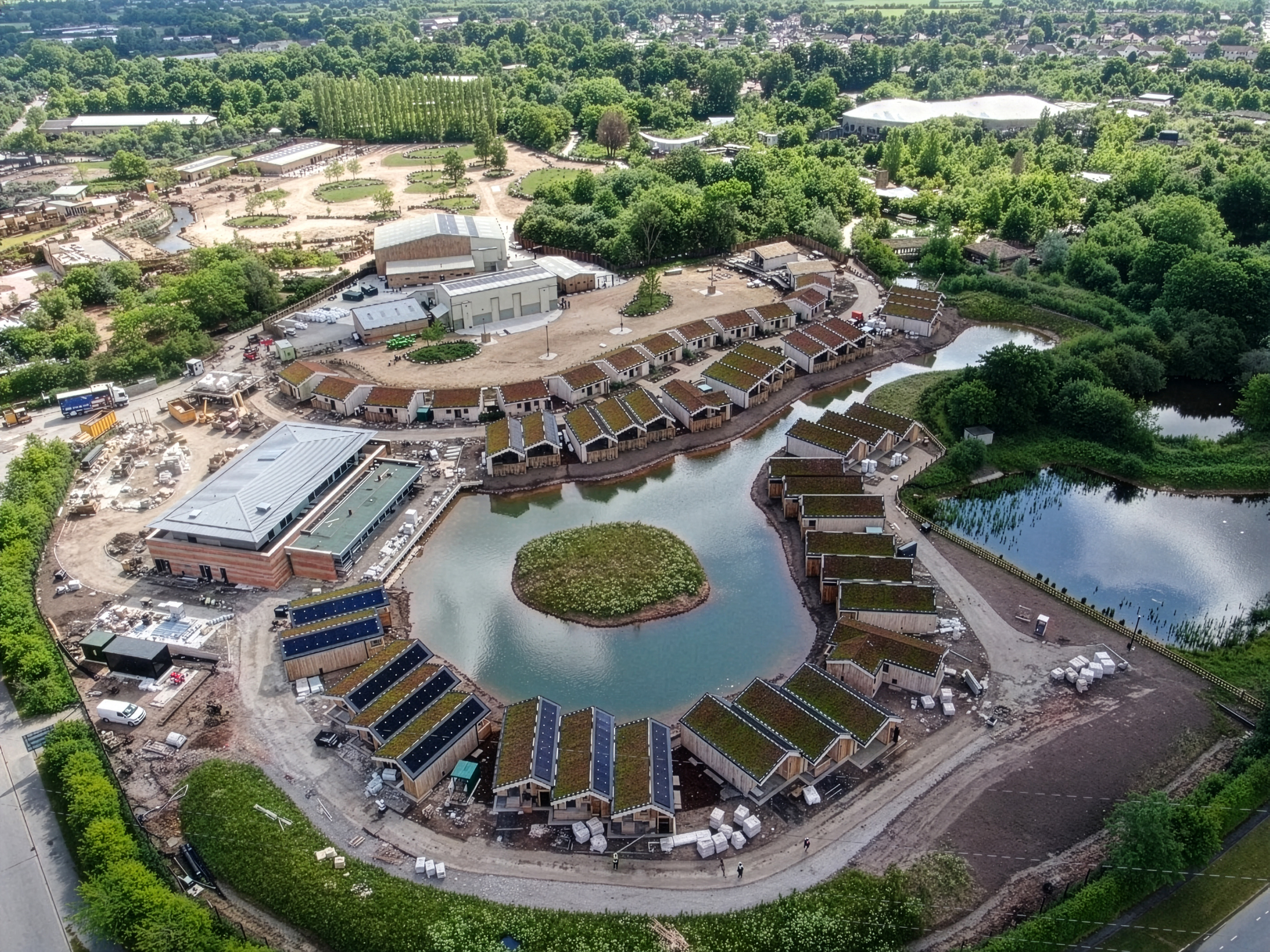
The roof type with perhaps the most potential for environmental benefit is a biosolar roof, where a solar PV system and biodiverse green roof are combined to maximise environmental performance. I believe it true to say there are very few solutions that can be designed into our buildings that provide such an impactful and wide range of benefits to the building and local environment. These benefits include:
- Cheap, zero-carbon renewable energy
- Biodiversity enhancement
- Stormwater management
- Protection of waterproofing that extends the life of the roofing materials indefinitely
- Urban cooling
- Reduction in airborne particulate matter
Combine a biosolar system with roof-mounted plant and machinery and the need for safe and easy access for maintenance and inspections increases, since the roof space becomes more densely populated and complex in design.
By their very nature, though, flat roofs are out of sight and, to an extent, out of mind which often leads to maintenance becoming an afterthought, if a consideration at all.
However, neglect the maintenance of your flat roof at your peril.
Lack of roof maintenance: The risks
The potential risks of insufficient roof maintenance are many and varied, ranging from a reduction in membrane lifespan to catastrophic failure. Following is some of the most common issues:
Blocked gutters and outlets
Irregular maintenance of gutters and outlets can lead to rainwater being prevented from draining properly. Standing water can cause leaks, damp insulation, and damage to internal finishes, all of which require costly and energy-intensive repairs and material replacement. What begins as a simple maintenance issue can therefore cascade into significant carbon and financial costs. Regular clearing of outlets is therefore not just good housekeeping; it is an act of financial and environmental stewardship.
Reduced solar PV performance
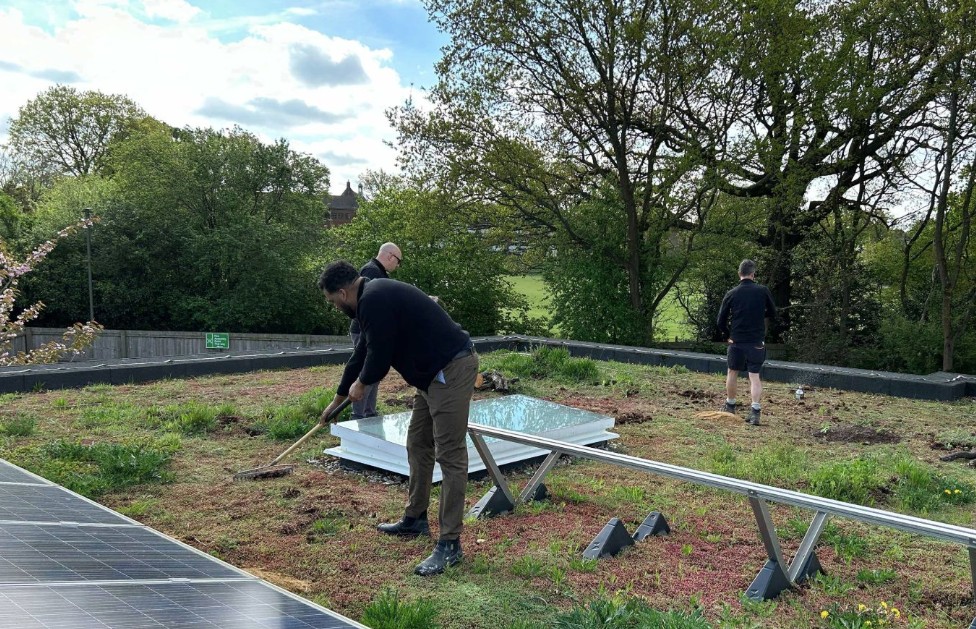
This becomes a more pertinent issue as flat roofs increasingly accommodate large solar photovoltaic (PV) systems. If regular maintenance of PV isn’t undertaken, dirt, debris, or shading from unchecked vegetation can significantly reduce solar generation, undermining both the environmental and financial rationale for installation.
Fire risk
More importantly, a lack of PV maintenance will compromise fire safety. For example, the impact of wind and water on loose wiring connections can have potentially disastrous outcomes. Regular inspections and maintenance are vital on all solar PV arrays to ensure that the system performs efficiently and safely throughout its design life.
Green roofs can play both a positive and negative role. On one hand, they improve biodiversity, manage stormwater, moderate building temperatures and extend the life of waterproofing membranes. However, when vegetation is unmanaged, roots can penetrate membranes, block outlets and cause leaks. Correctly specified vegetation barriers and root-resistant layers are essential for preventing damage, whilst regular maintenance will identify any potential issues while retaining the ecological benefits of the system.
So, I hear you ask, what does this have to do with sustainability?
Firstly, from a circular economy perspective, roof replacement carries high material, energy, and financial costs. The most sustainable roofing products are, quite simply, the ones that do not need to be purchased because the existing system is still performing well. Through planned inspection, timely repair, and data-led asset management, building owners can extend service life, avoid unnecessary replacements, and reduce waste. It shouldn’t be groundbreaking to highlight the financial benefits of on-going maintenance, but when aiming for a net-zero portfolio, very few professionals will consider the significant long-term carbon savings of simple maintenance procedures.
Secondly, saturated roof systems will simply not perform from a thermal perspective. Many building owners with saturated flat roof systems will have no idea they have an issue as the vapour barrier keeps the water out, even when the waterproofing system above is leaking. This saturated insulation will provide very limited thermal performance, meaning that more energy is required to heat the building, increasing costs to building occupiers and reducing the efficacy of low carbon heating systems.
Equally, a well-maintained solar PV system will operate at maximum efficiency, increasing renewable energy output and delivering higher returns. Conversely, neglect reduces yield, undermining investment cases and slowing payback periods.
Finally, climate change will amplify all these challenges. More intense rainfall will increase the risk of flooding from blocked outlets; hotter summers will accelerate membrane degradation; and more frequent storms will stress both roof systems and solar installations. Effective maintenance is therefore not optional; it is climate adaptation in action.
What does all this mean for specifiers and clients?
- Ensure maintenance requirements and costs are discussed and agreed at design stage.
- Maintenance operatives will require safe access – ensure this is considered for all flat roofing & solar projects.
- Keep records of inspections & maintenance – this could be requested by insurers in the future and may be required as part of guarantee terms and conditions.
- Clarify CDM and Building Regulations duty-holder responsibilities – clients, designers, and contractors should ensure responsibilities relating to structural suitability, fire performance, waterproofing interfaces and competence under CDM 2015 and Part 2A are clearly defined.
- Consider the impact on the building’s overall fire strategy – rooftop PV systems should not be considered in isolation from the building’s wider fire safety strategy.
In summary, maintaining flat roofs isn’t just a technical or financial responsibility, it is a vital part of sustainable asset management. Ongoing maintenance will help not only protect buildings and their occupants but reduce whole-life carbon and ensure that our built environment is resilient for the future in a changing world.