Closing the Gap on Inverted Warm Roof Insulation Performance
Design considerations

The inverted roof system (now formally an "inverted warm flat roof" following the latest BS 6229 revision) is a versatile and proven flat roofing solutions used in modern construction. Its ability to deliver long-term durability (often matching the service life of the building itself) makes it a favourite for architects, specifiers and contractors alike.
With design flexibility that supports everything from podium decks and landscaped terraces to heavy duty vehicular surfaces, green roofs and rooftop solar installations, the inverted roof system continues to play a central role in both commercial and residential developments.
Yet despite its apparent simplicity, the ultimate success of an inverted warm roof depends on something far less visible: the precision of its insulation design, detailing and installation. In particular, the relationship between the insulation layer and the water flow reducing layer (WFRL) is fundamental. When these elements are designed and installed correctly, the system performs exactly as intended. When they are not, performance can significantly fall short.
Why insulation quality matters more than ever
Unlike a exposed warm roof, an inverted warm roof places the insulation above the waterproofing layer. This arrangement means the membrane is protected from thermal shock, UV exposure, foot traffic, and mechanical damage. These factors contribute heavily to the system’s exceptional longevity.
However, positioning the insulation above the membrane exposes it directly to rainwater. This introduces design challenges unique to inverted roof systems and makes accurate thermal calculations critical. As regulatory pressures tighten and operational energy targets become more demanding, buildings must achieve the U values stated at design stage. There is no room for over-optimism as thermal performance must be deliverable in real world conditions.
This is only possible when the insulation’s moisture behaviour, rainwater cooling effects, and installation quality are fully considered. The choice of product matters, but installation technique and detailing matter just as much.
The importance of falls and drainage
Correct detailing begins at design stage, long before installation. The latest revision of BS 6229 (published in December 2025) reinforces the need for well designed falls and effective drainage on all flat roofs, including those using inverted build-ups.
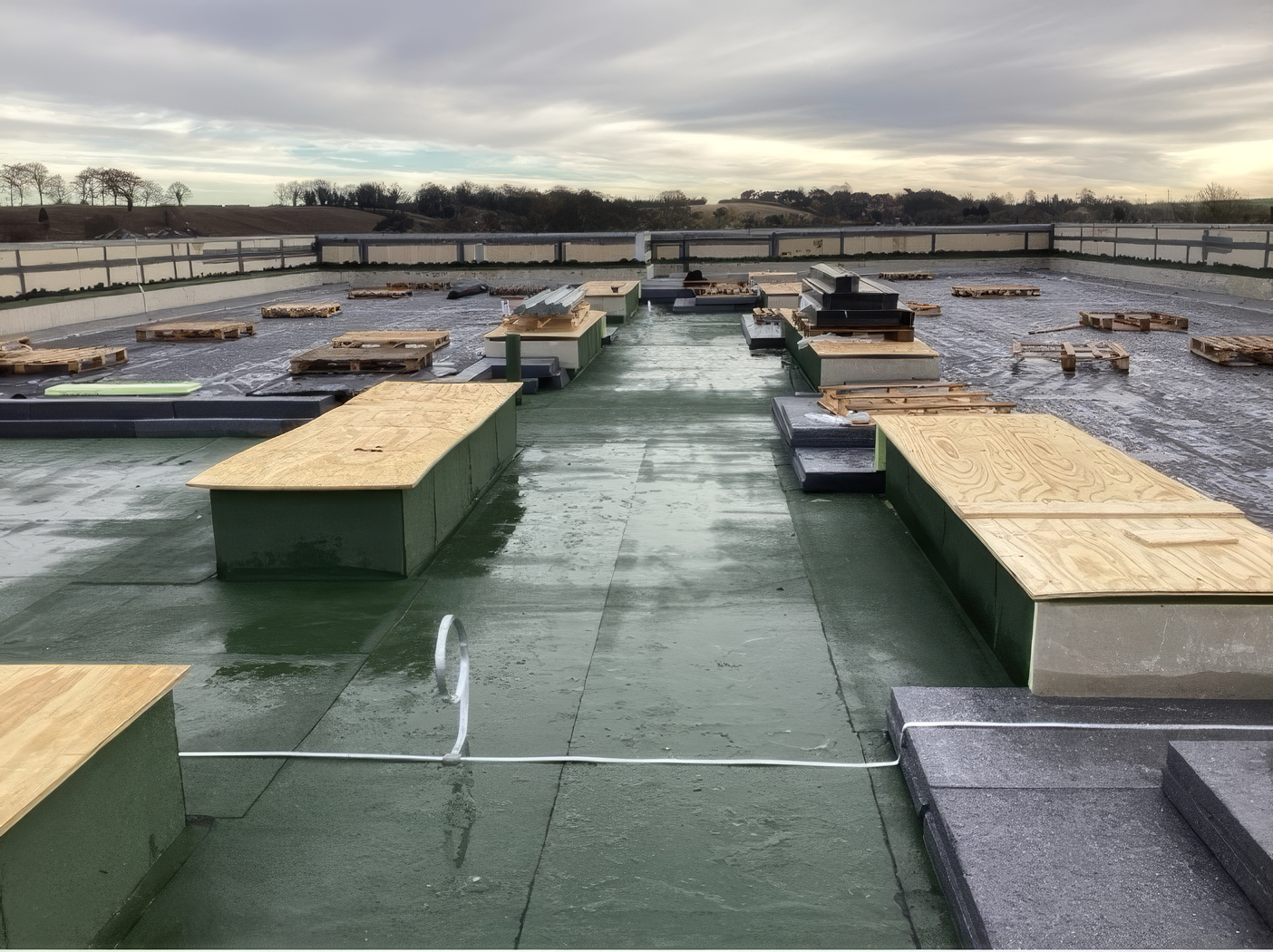
Poorly formed falls, backfalls, or deck irregularities can trap water beneath the insulation layer. In a warm roof build-up, surface water generally sits above the waterproofing and has little influence on heat loss. In an inverted system, however, ponding directly affects thermal performance. Water beneath the insulation increases heat loss through rainwater cooling, and the deeper the ponding, the greater the thermal penalty.
For this reason, the design and preparation of the deck are central to achieving the required U value, not minor considerations. Ensuring accurate falls, correct drainage detailing and a suitable substrate is foundational to the system’s long term performance.
Moisture and rainwater: The two essential correction factors
To model an inverted roof accurately, two correction factors must always be applied alongside the insulation’s declared thermal conductivity:
1. Moisture Correction Factor (fₘ)
This reflects long term moisture absorption by the insulation. Even products with extremely low water uptake will hold some moisture over time. As moisture content increases, so does thermal conductivity, meaning the insulation becomes less effective.
2. Rainwater Cooling Correction Factor (fᵣ)
Unique to inverted warm roof systems, this accounts for heat lost as rainwater flows under the insulation layer. The effect varies significantly depending on the UK rainfall zone of the project. Because of this geographical sensitivity, it must be calculated using the correct data and methodology.
If either correction factor is applied incorrectly, the resulting U value will not represent true performance. In practice, this could mean increased heat loss, higher operational energy bills, and potential non compliance with energy and carbon targets.
In short: without the correct application of both correction factors, the building will not perform as designed.
Why substrate quality matters
for new builds, the deck provider's first task is to assess the substrate and take any corrective actions. The deck must meet the required tolerances for surface regularity, falls and structural stability. Any deviation at this stage can undermine even the most well engineered specification.
No insulation product can compensate for a poor-quality substrate. An uneven deck leads to rocking boards, inconsistent contact, increased water movement, and ultimately a measurable loss of thermal performance.
The importance of installation on performance
In addition, of course, to waterproofing, insulation installation is a critical moment in the build up. Performance depends not only on the product but on the precision with which it is fitted. Insulation boards, whether square edged or rebated, must be installed:
- Close butted, with no visible gaps
- Fitted tight to all edges and upstands
- Cut accurately and neatly around penetrations
Even small gaps provide channels for cold bridging and for water movement beneath the insulation. Increased water flow means greater thermal loss, while cold bridges directly undermine the calculated U value.
Thermal bridges created by design elements such as plinths, mansafe posts and balustrade bases should already be accounted for during thermal modelling. But workmanship related gaps are not. Only careful installation can prevent unnecessary heat loss.
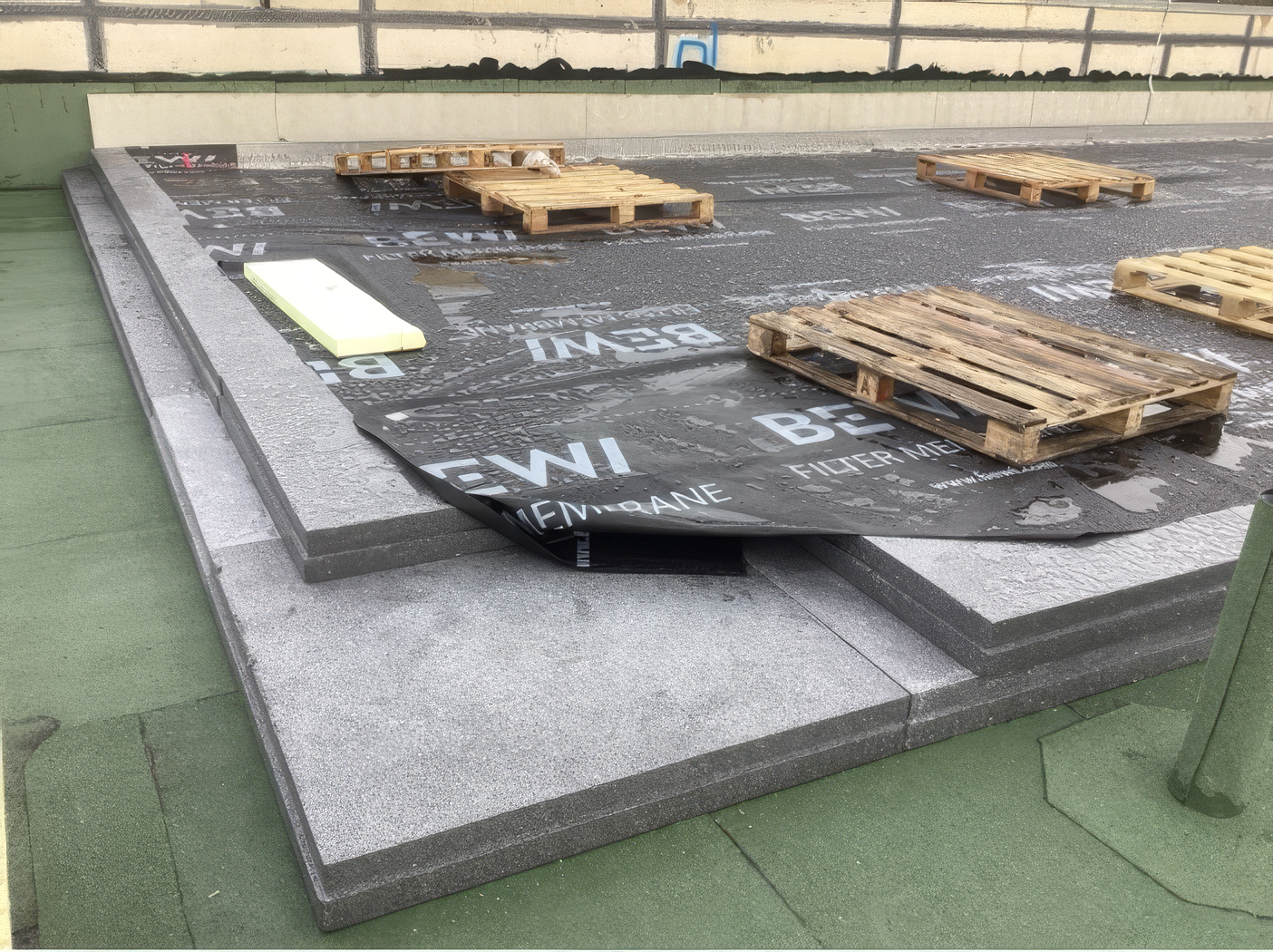
The water flow reducing layer (WFRL)
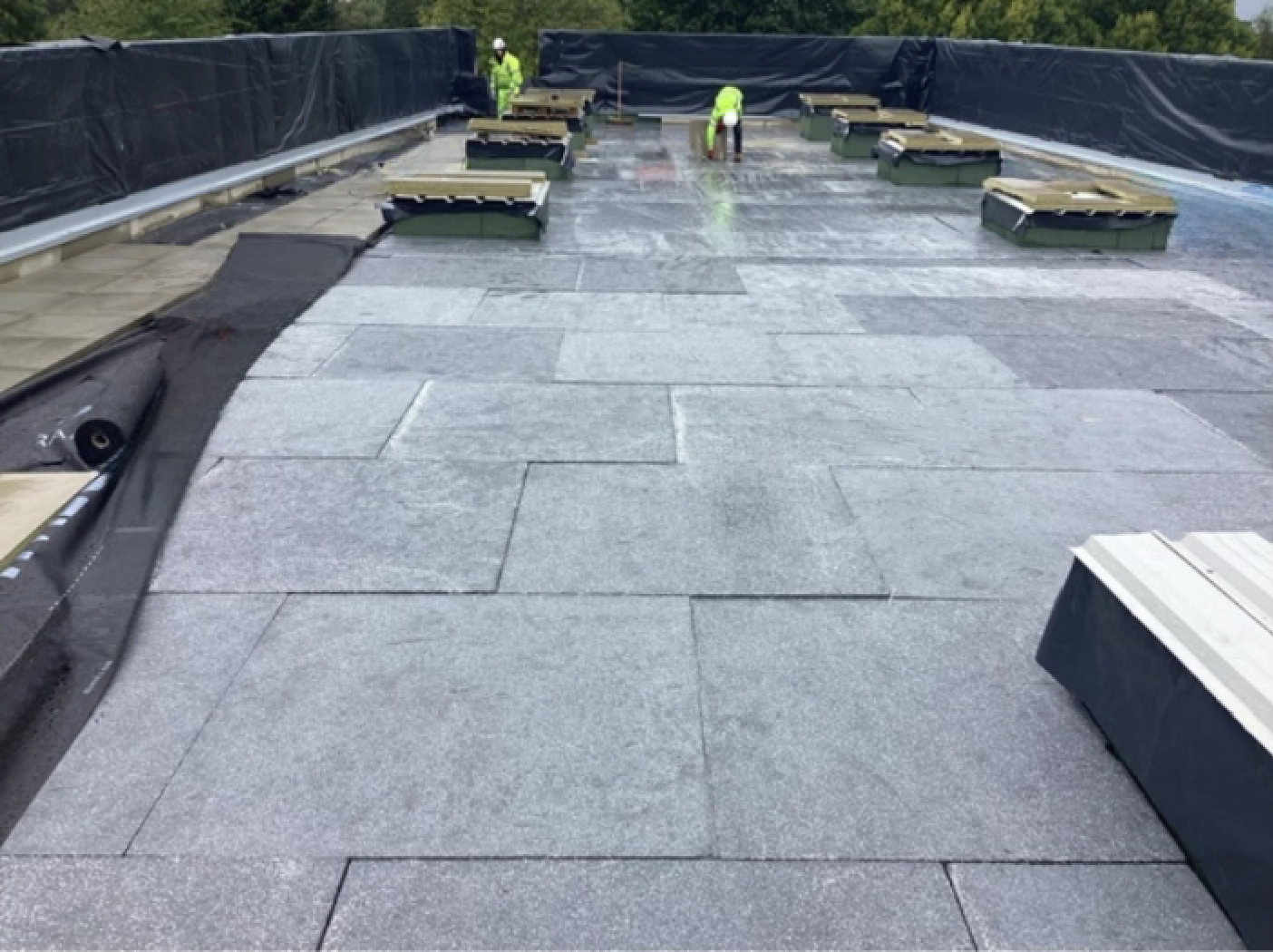
After the insulation has been installed, the WFRL is laid. Despite its thin profile, it has a disproportionately large influence on thermal performance. Its purpose is straightforward: to minimise the amount of water reaching the waterproofing membrane and flowing beneath the insulation.
BS 6229:2025 provides clear requirements:
- Minimum lap width: 300 mm
- If 300 mm cannot be achieved, all laps must be sealed
- For blue roofs, every lap and penetration must be sealed without exception
A correctly installed WFRL reduces water movement and therefore reduces the rainwater cooling effect. Poor installation, however, allows excess water beneath the insulation, dramatically lowering thermal performance.
Industry testing indicates:
- Poor WFRL installation can reduce performance by around 10%
- Poor insulation installation can cause an additional 10–20% reduction
Together, these losses can be enough to push a compliant design into non compliance.
Key Takeaways
- Inverted warm roof systems can provide robust, durable, and versatile performance as part of a correctly specified roof build‑up.
- Thermal performance depends as much on installation precision as on specification
- Accurate design elements, including falls and U value calculations, are critical
- High quality insulation installation is essential to achieving intended performance
- Correct installation of the WFRL is a key factor in thermal efficiency
- Attention to detail during installation helps ensure long term durability and dependable performance
- When installed correctly, inverted warm roofs deliver the performance promised at design stage